Implants
Are dental implants safe?
Dental implants are widely used and can be very successful, but “safe” depends on the right diagnosis, good gum health, careful planning, and long-term maintenance. Risks include infection, nerve or sinus involvement (depending on location), and peri-implant disease over time. The safest implant outcomes come from thorough assessment, realistic expectations, and a clear plan for cleaning and reviews.
When are implants recommended?
Implants can provide stable, fixed tooth replacement when a tooth has been lost or cannot be saved. They are placed into the jawbone and, once healed, a crown is attached on top to look and function like a natural tooth.
Your general health matters
Implant success depends not only on what happens in the mouth but also on your overall physical health. Your body needs to heal well after surgery, and certain medical conditions can affect this. Smoking significantly reduces implant success rates because it restricts blood flow to the healing bone and gums, increasing the risk of implant failure and infection. Uncontrolled diabetes also impairs healing and makes the bone around implants more vulnerable to infection over time. If you smoke or have diabetes, these factors should be discussed honestly with your dentist before committing to implant treatment, as they may affect the long-term prognosis.
Titanium vs Zirconia implants
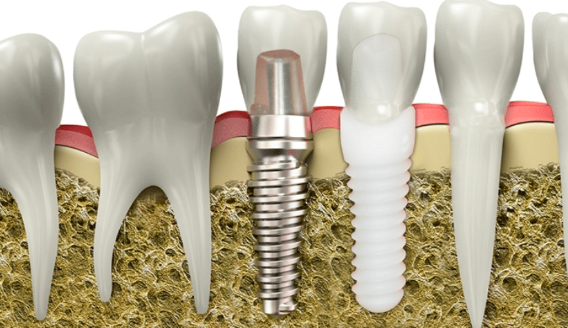
Most dental implants are made from titanium, which has a long track record of success and integrates well with bone. However, zirconia (ceramic) implants are now available as a metal-free alternative for patients who prefer to avoid metal in their body. Zirconia implants are biocompatible, tooth-coloured, and resistant to corrosion. While the evidence base for titanium is more established, zirconia implants are showing promising results and may be a good option depending on the clinical situation.
Implant-supported bridges and dentures
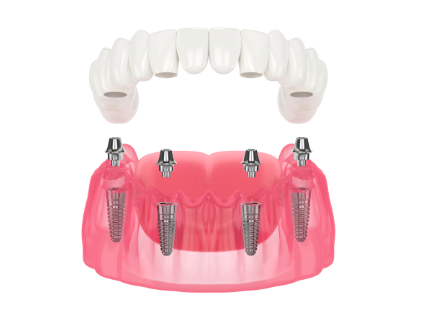
Implants are not only used to replace single teeth. They can also be used to support larger restorations such as full-arch bridges or dentures. Two well-known approaches are the “All-on-Four” and “All-on-Six” techniques, where four or six implants are strategically placed in the jaw to support a complete set of fixed teeth. This can be a life-changing option for patients who have lost most or all of their teeth and want a stable, non-removable solution rather than a traditional denture.
Alternatives to implants
- Bridge — a false tooth held in place by crowns on the neighbouring teeth
- Partial denture — a removable option that does not require surgery
- Leaving the gap — in select cases where the missing tooth does not affect function or aesthetics
Risks & long-term considerations
- Surgical complications (infection, nerve or sinus involvement depending on location)
- Peri-implant inflammation or disease — similar to gum disease but around the implant
- Ongoing hygiene requirements — implants need regular professional cleaning and home care just like natural teeth
Questions to ask your dentist
- What are my personal risk factors (smoking, diabetes, gum disease)?
- Am I a suitable candidate for implants given my overall health?
- Would a titanium or zirconia implant be more appropriate for me?
- What is the maintenance schedule after placement?
When to seek urgent in-person care
Post-op swelling with fever, worsening pain, or difficulty swallowing/breathing requires urgent care.