Implants
What is the best way to replace missing teeth?
There are three main options for replacing a missing tooth: an implant, a bridge, or a denture. Each has different strengths and trade-offs in terms of function, aesthetics, cost, longevity, and impact on your remaining teeth. The best choice depends on your clinical situation, budget, and long-term goals. But first, it is important to understand why replacing a missing tooth matters.
Why is it important to replace missing teeth?
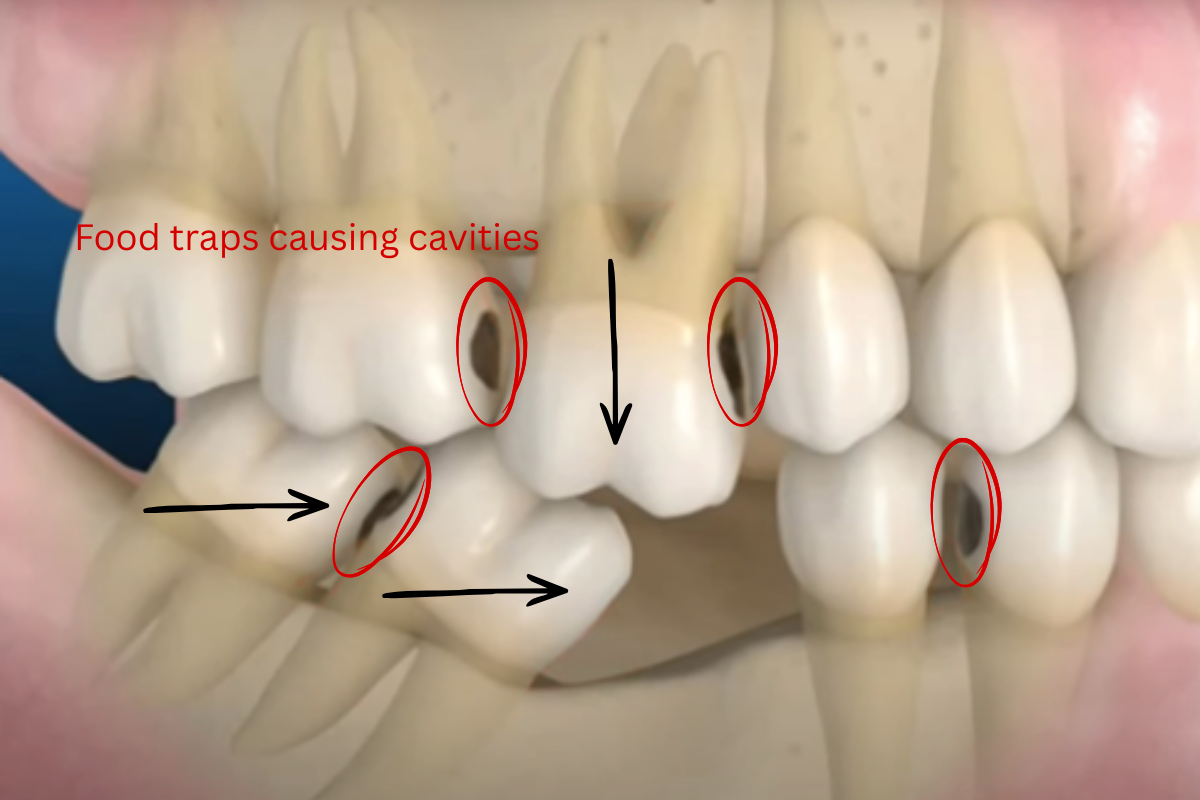
When a tooth is lost, the surrounding teeth can begin to drift into the empty space over time. This can lead to changes in your bite, uneven wear on other teeth, and difficulty chewing. The opposing tooth (the one above or below the gap) may also start to over-erupt, moving out of its normal position because there is nothing to bite against. These changes can create problems that are more complex and expensive to fix later.
Beyond function, a missing tooth can affect your confidence and the appearance of your smile, particularly if it is in a visible area. Replacing a missing tooth helps to maintain the alignment of your remaining teeth, preserve your chewing ability, and support the structure of your face.
The three main options
The three most common ways to replace a missing tooth are:
- Implant — a titanium or zirconia screw placed into the jawbone, with a crown attached on top
- Bridge — a false tooth held in place by crowns cemented onto the teeth either side of the gap
- Denture — a removable plate carrying one or more replacement teeth
Comparing your options
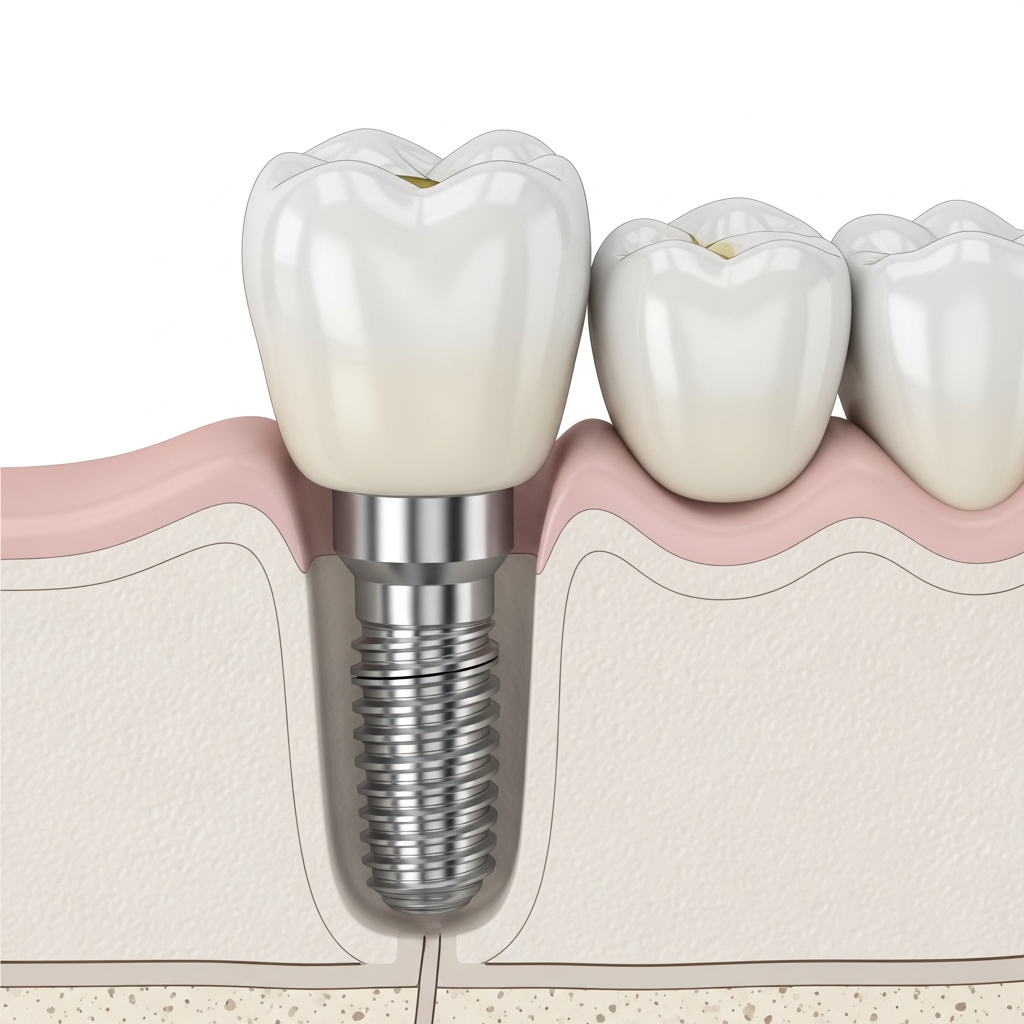
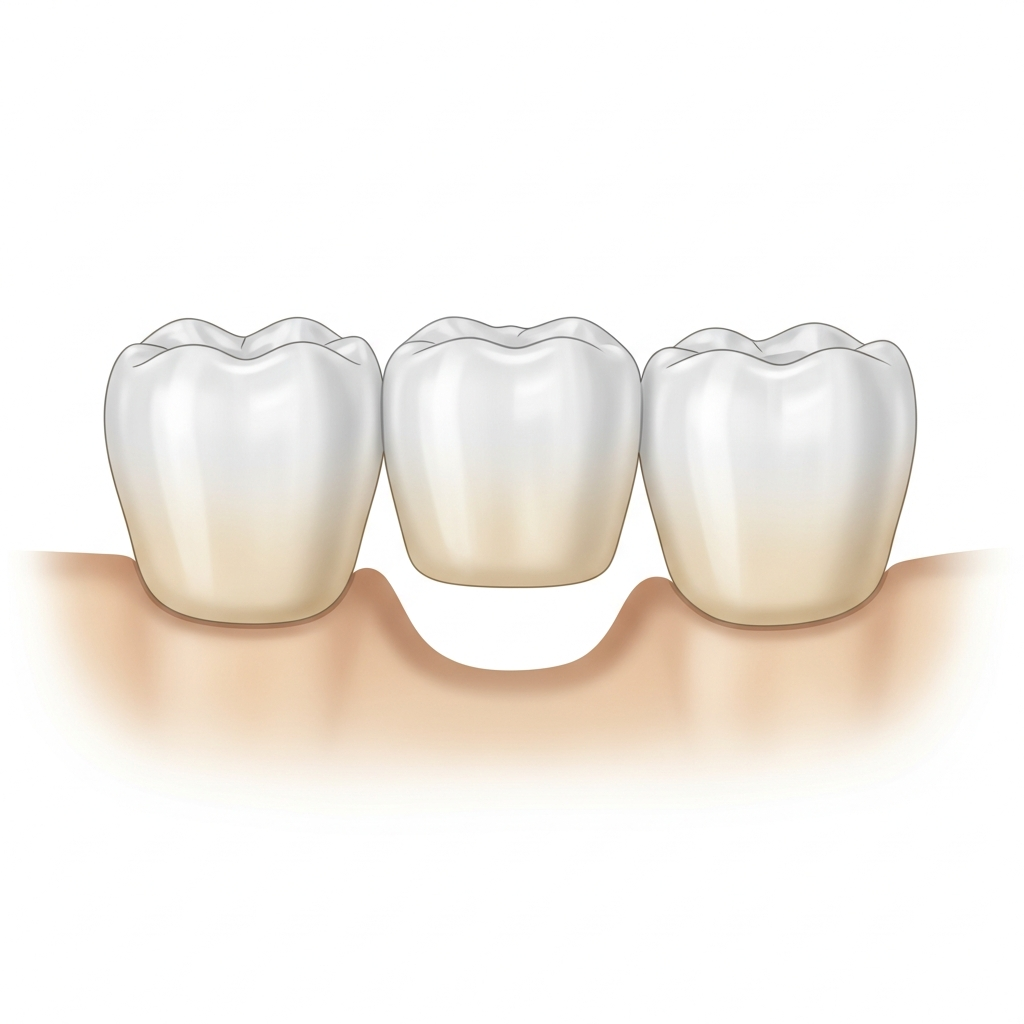
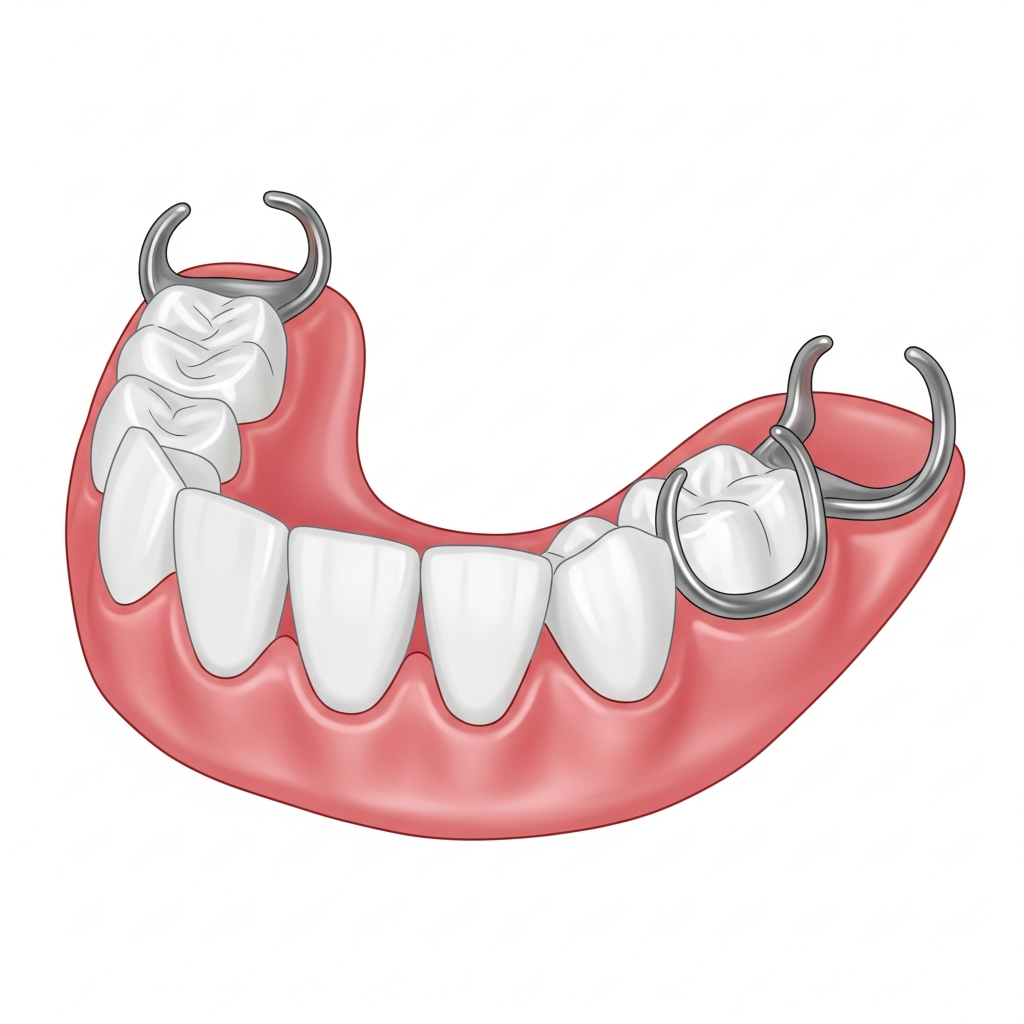
| Feature | Implant | Bridge | Denture |
|---|---|---|---|
| Function | Excellent — works and feels similar to a natural tooth | Very good — fixed in place, stable chewing | Moderate — can move slightly, takes time to adjust |
| Aesthetics | Excellent — looks very natural | Good to excellent — depends on design | Fair to good — visible clasps on some designs |
| Cost | Higher upfront cost | Moderate | Lower upfront cost |
| Longevity | 15–25+ years with good care | 10–15 years typically | 5–10 years before reline or replacement |
| Maintenance | Regular brushing and professional cleaning around the implant | Requires special flossing under the bridge; harder to clean | Must be removed daily for cleaning |
| Impact on other teeth | None — does not involve neighbouring teeth | Requires shaving down healthy neighbouring teeth for crowns | Clasps can put stress on neighbouring teeth over time |
| Surgery required | Yes — minor oral surgery with healing time | No | No |
| Bone preservation | Yes — stimulates the jawbone and helps prevent bone loss | No — bone under the gap may still shrink over time | No — bone loss continues under the denture |
| Long-term risks | Can develop gum disease around the implant, lose bone, and become loose in some cases | May result in the supporting teeth requiring root canal treatments or breaking underneath | Will get loose over time due to bone loss |
Maryland bridges — a very conservative option
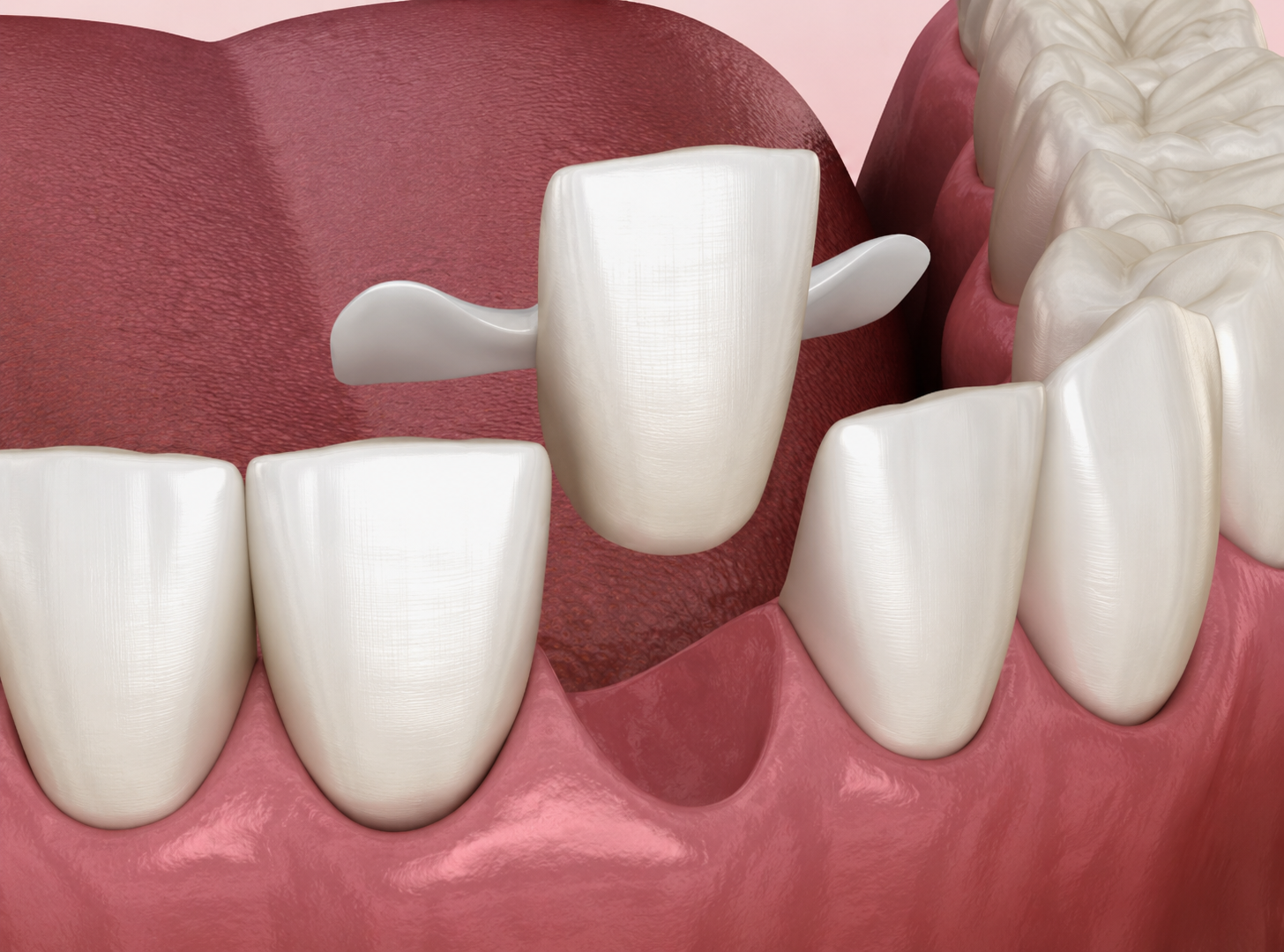
A Maryland bridge (also called a resin-bonded bridge) is one of the most conservative ways to replace a single missing tooth. Instead of crowning the neighbouring teeth, a false tooth is attached to a thin metal or porcelain wing that is bonded onto the back surface of an adjacent tooth. This means little or no drilling is needed, and the healthy tooth structure next door is left almost completely untouched.
Maryland bridges can work especially well when:
- A single tooth is missing, often towards the front of the mouth
- The neighbouring teeth are healthy and have not been heavily filled or crowned
- An implant is not possible or not yet suitable — for example in younger patients whose jaws are still developing, or as an interim option while waiting to place an implant
- A quick, minimally invasive and lower-cost option is preferred
Because so little tooth structure is removed, a Maryland bridge is largely reversible and keeps your future options open. The main trade-off is that the bond can occasionally come loose and may need re-bonding, and they are best suited to areas that are not under heavy biting forces. For the right tooth in the right situation, however, they offer an excellent balance of aesthetics, tooth preservation, and value.
Other options to consider
- Orthodontic space closure — in some cases, braces or aligners can close the gap by moving neighbouring teeth together, avoiding the need for a replacement altogether
- Leaving the gap — in select cases where the missing tooth does not affect function, bite stability, or aesthetics, monitoring may be appropriate
Questions to ask your dentist
- Which option is best suited to my clinical situation?
- What are the long-term costs including maintenance and replacements?
- Will my neighbouring teeth be affected?
- Is my bone and gum health suitable for an implant?
When to seek urgent in-person care
Pain, swelling, fever, or trauma needs urgent in-person assessment.