Gum Health
Why do my gums bleed when I brush?
Bleeding gums are usually a sign of inflammation—most commonly from plaque along the gumline. It’s tempting to brush less when gums bleed, but gentle, thorough cleaning is often part of the solution. If bleeding persists for more than 1–2 weeks despite improved brushing and flossing, it’s worth an examination to check for gum disease, tartar build-up, or other causes.

Why you should not ignore bleeding gums
Bleeding is an early warning sign of gum inflammation. Whilst often painless, inflamed gums can lead to other health conditions.
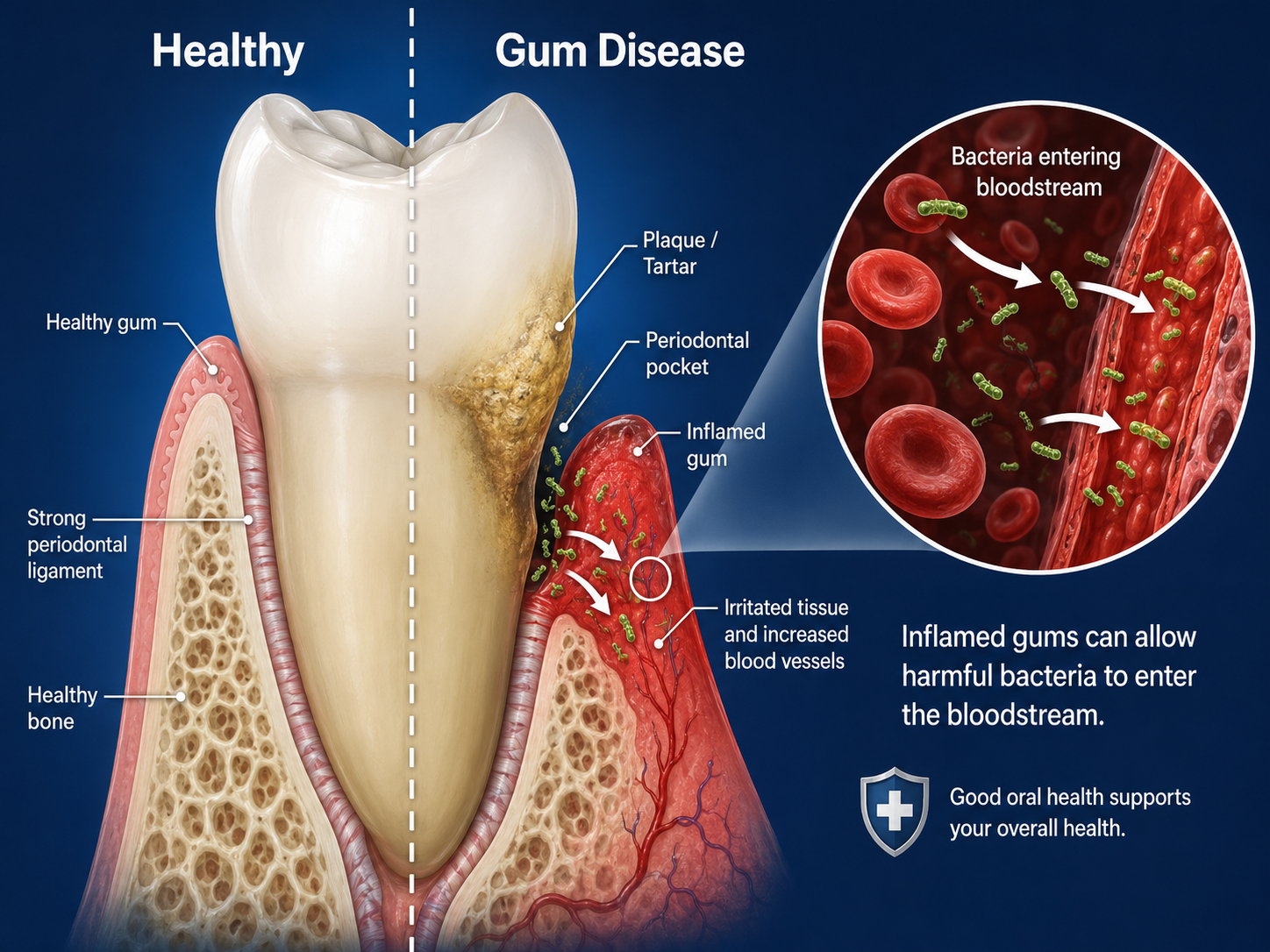
Research increasingly shows a link between gum disease (periodontitis) and systemic health problems. The bacteria responsible for gum inflammation can enter the bloodstream through the inflamed tissue, triggering an immune response elsewhere in the body. Studies have found associations between chronic gum disease and cardiovascular disease, diabetes complications, adverse pregnancy outcomes, and certain autoimmune conditions. Keeping your gums healthy is not just about saving your teeth — it matters for your overall wellbeing.

Recommendations
Consult a dentist. In the meantime:
- Improve your brushing technique and use interdental brushes or floss daily
- Professional cleaning if tartar is present
Risks & long-term considerations
- Ongoing bleeding can indicate gum disease and possible bone loss
Questions to ask your dentist
- Is this gingivitis or periodontitis?
- What should I change at home?
When to seek urgent in-person care
If bleeding is heavy, sudden, or paired with swelling/fever, seek urgent care.