Gum Health
Gum disease treatment: what should I expect?
Gum disease treatment usually focuses on removing plaque and tartar beneath the gumline and helping you control inflammation long-term. Early gum disease may respond to improved home care and routine cleaning, while more advanced cases may need deep cleaning, review appointments, and sometimes referral to a specialist. The aim is stability—healthy gums that don’t bleed and bone levels that don’t continue to drop.

"Keeping your gums healthy is not just about saving your teeth — it matters for your overall wellbeing."
How common is gum disease?
Gum disease (periodontitis) affects over 30% of the world’s population, making it one of the most common chronic conditions in humans. It ranges from mild gum inflammation (gingivitis) to severe bone loss that can lead to tooth loss. Despite being so widespread, it often goes undiagnosed because it is usually painless in its early stages.
How is gum disease diagnosed?
Your dentist or hygienist diagnoses gum disease by:
- Measuring the “pocket depth” around each tooth using a small probe — healthy gums typically measure 1–3mm, while deeper pockets suggest bone loss
- Checking for bleeding on probing, which is a key sign of active inflammation
- Taking X-rays to assess the level of bone supporting the teeth
- Looking for signs of gum recession, tooth mobility, and tartar build-up below the gumline The results are used to stage and grade the disease, which helps determine the right treatment plan.
Why gum disease affects your overall health

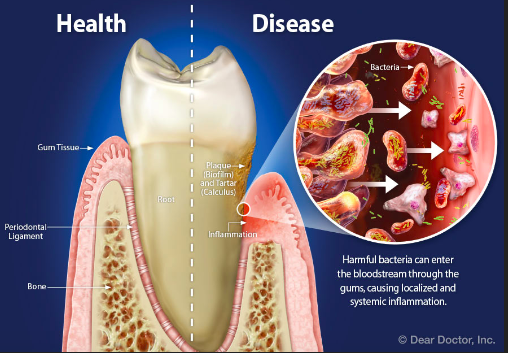
Research increasingly shows that gum disease is not just a mouth problem. The bacteria responsible for gum inflammation can enter the bloodstream through the inflamed tissue, triggering an immune response elsewhere in the body. Studies have found associations between chronic gum disease and cardiovascular disease, diabetes complications, adverse pregnancy outcomes, Alzheimer’s disease, dementia, and certain autoimmune conditions. Keeping your gums healthy is not just about saving your teeth — it matters for your overall wellbeing.
Why gum disease must be treated before major dental work
If you are considering dental implants, crowns, veneers, or other significant dental work, it is essential to get gum disease under control first. Placing an implant into a jaw with active gum disease dramatically increases the risk of implant failure, because the same bacteria that destroy bone around natural teeth can attack the bone around an implant. Similarly, crowns and veneers placed on teeth with inflamed or receding gums are more likely to develop problems at the margins, leading to decay, poor aesthetics, and early failure. Stabilising the gums first gives any major dental work the best possible chance of long-term success.
What does treatment involve?
Bleeding, bad breath, and bone loss are signs that the gums need attention. Treatment usually focuses on:
- Removing plaque and tartar above and below the gumline (scaling and root surface debridement)
- Improving your daily home care routine — brushing technique, interdental brushes, and flossing
- Regular review appointments to monitor pocket depths and bleeding
- In advanced cases, referral to a specialist periodontist for surgical or regenerative treatment
Risks & long-term considerations
- Gum disease is usually managed, not “cured”
- Stability requires ongoing maintenance and regular professional cleaning
Questions to ask your dentist
- What stage is my gum disease?
- What changes should I see, and by when?
- Do I need to see a specialist?
- Should my gums be stable before we start any other dental work?
When to seek urgent in-person care
Rapid swelling, abscess, fever, or spreading infection needs urgent treatment.