Veneers
Non-Shaving vs Minimal Prep Veneers
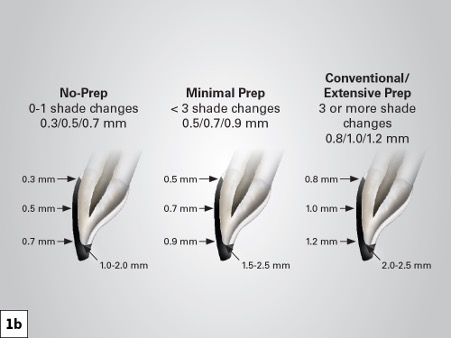
Not all veneers are created equal. The amount of tooth structure removed — if any — varies significantly between non-shaving (no-prep) veneers and minimal-prep veneers. Understanding the difference is important because it affects the look, feel, longevity, and long-term health of your teeth.
What are non-shaving (no-prep) veneers?
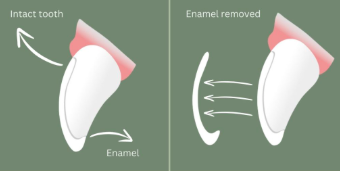
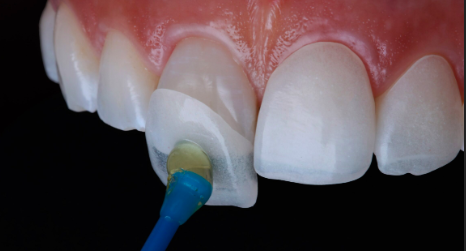
Non-shaving veneers are ultra-thin porcelain shells bonded directly to the front of your teeth without removing any enamel at all. Because nothing is drilled away, the process is potentially reversible. They work best on teeth that are already well-positioned, where the goal is to add length, close small gaps, or refine shape.
What are minimal-prep veneers?
Minimal-prep veneers still involve some enamel reduction, but far less than traditional veneers. A very thin layer (typically 0.3–0.5 mm) is removed to create space for the porcelain. This allows the dentist to make bigger changes to colour, shape, and alignment while keeping the final result looking natural and not bulky.
How do they compare?
| Feature | Non-Shaving (No-Prep) | Minimal-Prep |
|---|---|---|
| Tooth preparation | None — no drilling or enamel removal | Slight — a thin layer of enamel is removed |
| Reversibility | Potentially reversible — veneers can be removed | Irreversible — enamel cannot grow back |
| Aesthetic result | Good for subtle improvements; may look slightly thicker | Excellent — more control over colour, shape, and contour |
| Risk of bulkiness | Higher — adding material without removing any tooth can make teeth look or feel thicker | Lower — enamel removal creates space for a natural profile |
| Colour change | Limited — the underlying tooth colour may show through the thin porcelain | Better — can mask darker teeth more effectively |
| Gum health | Edges must be very precisely finished to avoid gum irritation and plaque traps | Easier to achieve a smooth, flush margin with the tooth |
| Cavity risk | Higher if edges are not perfectly sealed, as gaps can trap bacteria | Lower with well-fitted margins |
| Sensitivity | Minimal — no enamel is disturbed | Possible mild sensitivity after preparation |
| Longevity | May be slightly shorter in some cases due to bonding challenges | Typically 10–15+ years with good care |
| Cost | Similar to or slightly less than minimal-prep | Similar to or slightly more than no-prep |
| Best suited for | Small gaps, minor shape changes, adding length on well-aligned teeth | Moderate colour/shape changes, slightly uneven or discoloured teeth |
Which is right for me?
The honest answer is: it depends on your teeth. Non-shaving veneers sound appealing because nothing is drilled, but they are only suitable for a small number of patients. If teeth are prominent, crowded, or heavily discoloured, adding porcelain on top without any preparation can look unnatural or create problems at the gum line.
Minimal-prep veneers offer a good middle ground — less invasive than traditional veneers, but with better aesthetic control and fit than no-prep options.
Questions to ask your dentist
- Am I genuinely a candidate for non-shaving veneers, or would minimal-prep give a better result?
- How will the veneers sit against my gums — is there a risk of gum irritation or plaque build-up?
- Can I see a mock-up or trial smile before any permanent work is done?
- What happens if a veneer chips or debonds — what does replacement look like?
When to seek urgent in-person care
Severe pain, swelling, fever, trauma, or bleeding needs urgent in-person evaluation.