Fillings
Should I replace all my metal fillings with white ones?
The answer isn’t always straightforward. For some people, replacing metal (amalgam) fillings with white (composite) ones can be a good idea — especially if the fillings are worn, leaking, or you prefer a mercury-free approach. But for others, removing stable, well-functioning fillings may cause more harm than good — particularly if they are deep and close to the nerve. The safest approach is to assess each filling individually, rather than replacing them all at once.
A question I'm asked very often
"Should I replace all my old metal (silver) fillings with white ones?"
The answer isn’t always straightforward.
For some people, it can be a good idea. For others, it may cause more harm than good.
Let’s break it down simply so you can make an informed decision.
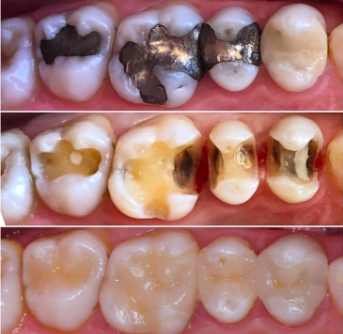
What are metal fillings?
Metal fillings (often called silver or amalgam fillings) have been used in dentistry for over 100 years.
They are:
- Strong
- Long-lasting
- Cost-effective
Many people still have them — and many are functioning perfectly well.
Why do people want to replace them?
There are two main reasons: cosmetic and health-related.
1. Cosmetic reasons
Metal fillings can be:
- Dark in colour
- Visible when you smile or laugh
- Associated with an older look
White fillings (composite or ceramic) are:
- Tooth-coloured
- More natural-looking
- Often preferred for aesthetic reasons
- Ceramic options (such as porcelain inlays or onlays) offer even greater durability and stain resistance
This is one of the most common and reasonable reasons for replacement.
2. Health concerns (mercury content)
Amalgam fillings contain mercury, which raises understandable concerns.
Some people worry about:
- Long-term exposure to mercury vapour
- Possible links to systemic health issues
The IAOMT (International Academy of Oral Medicine and Toxicology) is one organisation that has compiled many studies referenced on its website raising concerns about mercury toxicity from amalgam fillings.
What does the evidence say?
This is where things become more nuanced.
Major organisations like the World Health Organization and FDA state that amalgam is generally safe for most people.
However, they also acknowledge that:
- Mercury is a toxic substance in high doses
- Certain groups (e.g. pregnant women, children) may require more caution
So the reality is:
There is ongoing debate — not a simple yes or no answer.
The important question: what happens when you remove them?
This is often overlooked.
Removing a filling is not a neutral act — it has consequences.
1. Risk to the tooth
If a filling is very deep or close to the nerve, removing it can:
- Irritate or damage the nerve
- Lead to sensitivity or pain
- Increase the risk of needing a root canal
Sometimes, the safest option is to leave a well-functioning filling alone.
2. Loss of tooth structure
Each time a filling is replaced:
- A small amount of additional tooth is usually removed
Over time, this can:
- Weaken the tooth
- Increase the likelihood of cracks or fractures
This is closely related to the tooth death spiral — the cycle where each intervention brings a tooth closer to extraction.
3. Mercury exposure during removal
This is a key point many patients are not told.
When amalgam fillings are drilled out:
- Mercury vapour is released
- Both the patient and dental team are exposed
Some studies have also shown links between high mercury levels and conditions such as rheumatoid arthritis, autoimmune diseases, chronic fatigue syndrome, and neurological symptoms. While the evidence is still evolving, if you have concerns about mercury and its potential impact on your overall health, it is worth considering visiting a biological or functional dentist who specialises in safe amalgam removal and a more holistic approach to dental care.
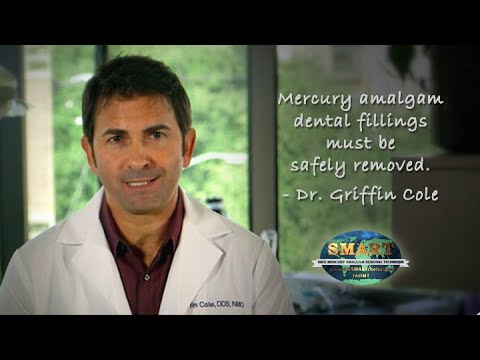
If you are concerned about mercury exposure during amalgam removal, the safest way to remove old amalgam fillings is with the SMART (Safe Mercury Amalgam Removal Technique) protocol, which includes:
- Rubber dam isolation
- High-volume suction
- Special filtration and protective measures
Not all clinics use this protocol. For further resources on amalgam safety and mercury toxicity, the IAOMT (International Academy of Oral Medicine and Toxicology) is a valuable source of information.
 SMART Safe Mercury Amalgam Removal
So should you replace them?
It depends on your individual situation.
You might consider replacing them if:
- You dislike how they look
- The fillings are worn, leaking, or breaking down
- You have cracks around the filling
- You prefer a mercury-free approach
You might be better leaving them if:
- The fillings are stable and not causing problems
- They are very deep and close to the nerve
- You want to avoid unnecessary risk to the tooth
A balanced perspective
This is not about saying metal fillings are bad or white fillings are better.
It’s about understanding:
- Your current dental health
- The condition of each individual tooth
- Your personal priorities (health, aesthetics, longevity)
My philosophy
I take a conservative, case-by-case approach:
- If a filling is healthy and stable → I usually recommend leaving it
- If there are signs of failure → replacement may be appropriate
- If replacing → it should be done carefully and safely
- If replacing for health concerns over mercury fillings → it is absolutely imperative that they are removed using the SMART protocol to avoid excessive mercury vapour exposure during removal, which would be counter-productive
Because in dentistry, doing less — but doing it well — is often the best long-term strategy.
This aligns closely with the principles of minimally invasive dentistry.
Questions to ask your dentist
- Which of my fillings actually need replacing, and why?
- How deep are these fillings — is there a risk to the nerve?
- Do you use rubber dam and safe removal protocols when taking out amalgam?
- What will the replacement material be, and how long is it likely to last?
- What happens if we leave this filling alone for now?
When to seek urgent in-person care
If you have severe pain, swelling, fever, trauma, or difficulty swallowing/breathing, seek urgent in-person care.