Crowns & Onlays
Splinted and joined crowns and bridges - the good, the bad and the ugly
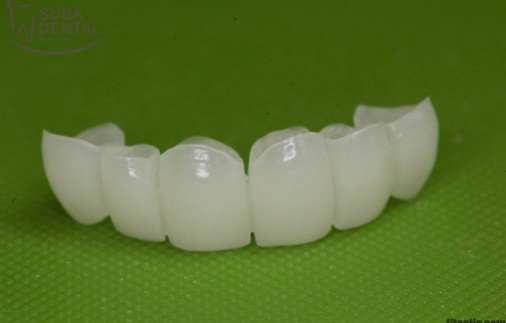
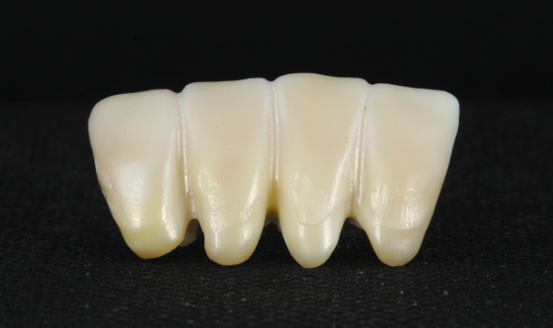
Splinted (joined) crowns are individual crowns that have been linked together as a single unit, and they are often mistakenly called bridges. A true bridge replaces a missing tooth, using crowns on the teeth either side as anchors, with a false tooth in between. While both have their place in dentistry, joining teeth together comes with serious long-term risks — cement fatigue, hidden decay underneath, more aggressive tooth preparation, and the possibility that one failure can bring the whole unit down, sometimes resulting in multiple tooth loss.

"Joining teeth together rigidly goes against the way the mouth is naturally designed to function — and the consequences often only show up years down the line, when it's too late to undo."
Splinted crowns vs true bridges — what's the difference?
This is one of the most common areas of confusion for patients.
Splinted (joined or linked) crowns are individual crowns that have been physically connected to each other to form one continuous unit. All the teeth underneath are still present — they have just been crowned and locked together.
A true bridge, on the other hand, is used when a tooth is actually missing. Crowns are placed on the teeth either side of the gap (called abutments), and a false tooth (called a pontic) is suspended between them to fill the space.
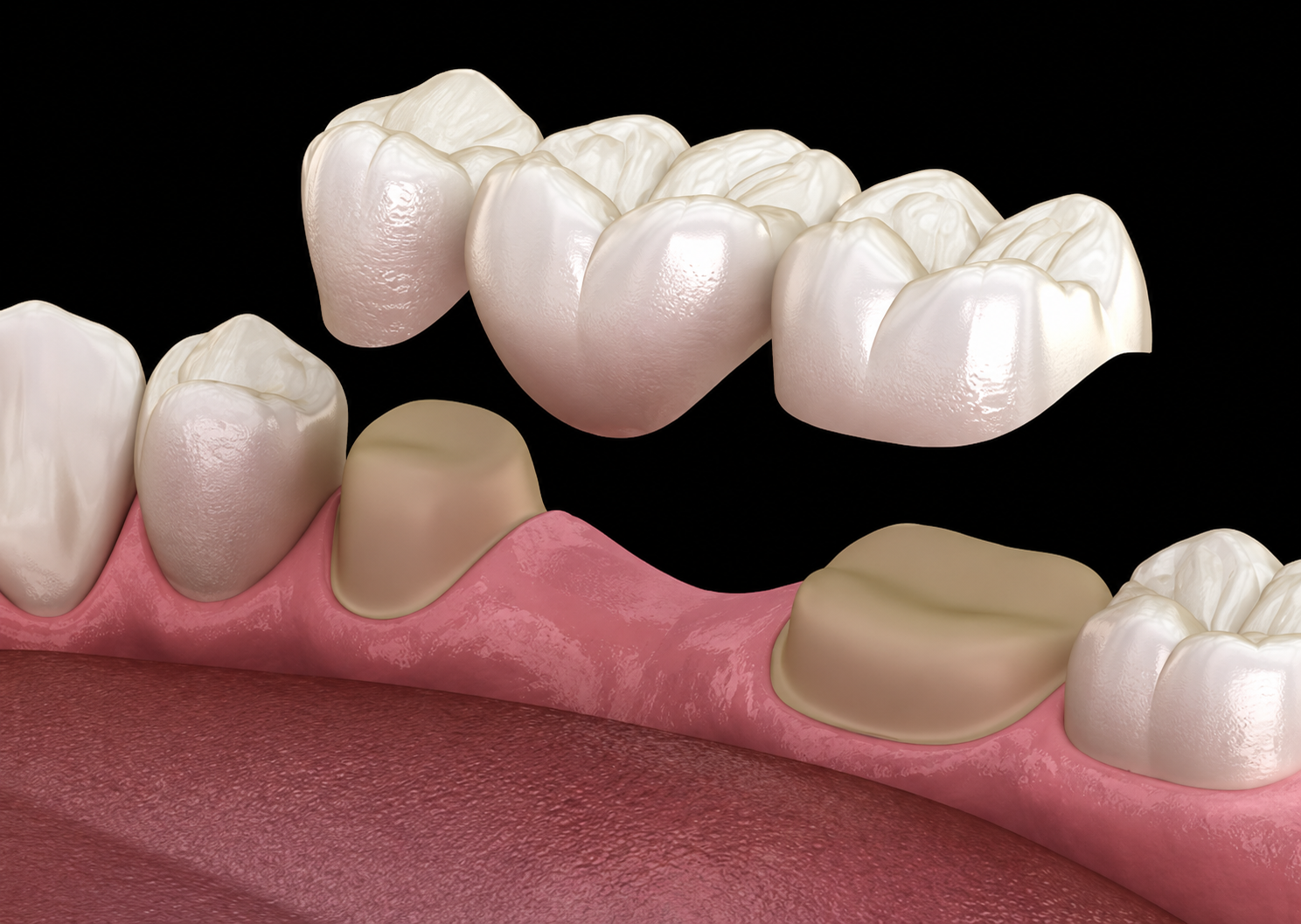
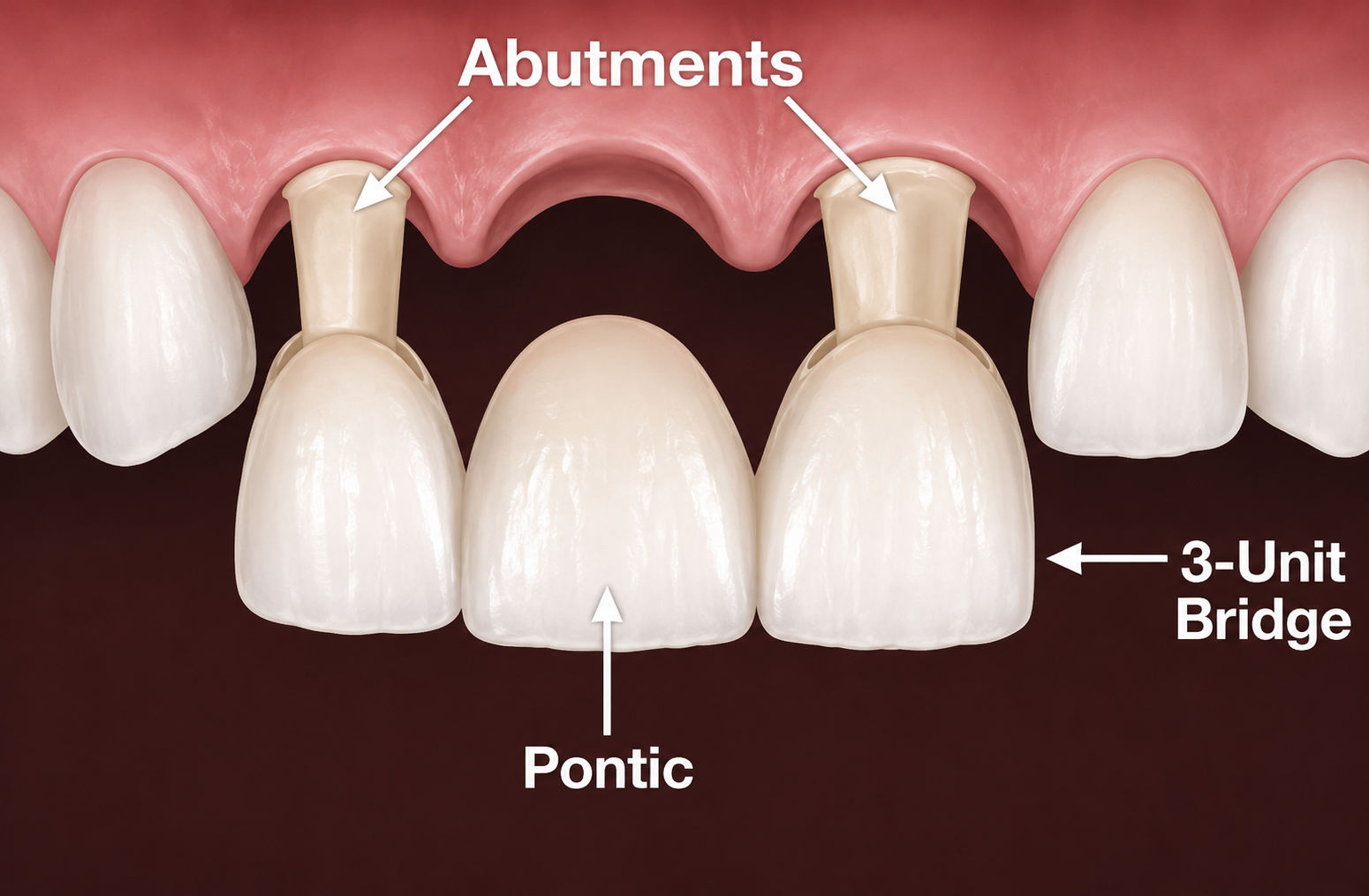
So the simple distinction is:
- Splinted crowns = teeth are present, crowns are joined
- Bridge = a tooth is missing, and the gap is filled by a false tooth held in place by crowns either side
Why joining teeth together can be a problem
1. Teeth are designed to micro-move
Natural teeth are not rigidly fixed in the jaw. Each tooth sits in its socket suspended by tiny fibres called the periodontal ligament, which allow a small amount of cushioned movement when you bite, chew, and clench.
This micromovement is normal, healthy, and essential.
When crowns are joined together:
- That natural independent movement is restricted
- Stress builds up at the cement interface and within the joined unit
- Forces are no longer absorbed evenly
Over time, this constant low-level stress contributes to what dentists call cement fatigue — the gradual breakdown of the cement seal between the crown and the tooth.
2. Cement fatigue and hidden decay (secondary caries)
Once the cement seal starts to fail, microscopic gaps form between the crown and the tooth. Saliva and bacteria can seep in, and decay quietly begins underneath the crown — hidden from view.
The really insidious part is that, because the teeth are joined together, the affected tooth can't loosen or give you obvious warning signs. The neighbouring teeth in the unit hold everything firmly in place. So:
- You don't feel any movement
- You may not feel pain (especially if the nerve has slowly died)
- Decay can progress for months or even years undetected
By the time the problem becomes obvious, the underlying tooth may be severely decayed — sometimes beyond repair.
3. The whole unit can fail at once
Because the crowns are joined, a problem with one tooth doesn't stay isolated.
When the decay finally reaches a critical point, the whole splinted unit can come away in one piece — sometimes taking multiple teeth with it. Patients are often shocked when this happens, because everything felt fine right up until it wasn't.
This can mean:
- Losing several teeth at the same time
- Far more complex and expensive treatment to rebuild
- A much bigger impact on the bite, function and appearance than if a single tooth had failed on its own
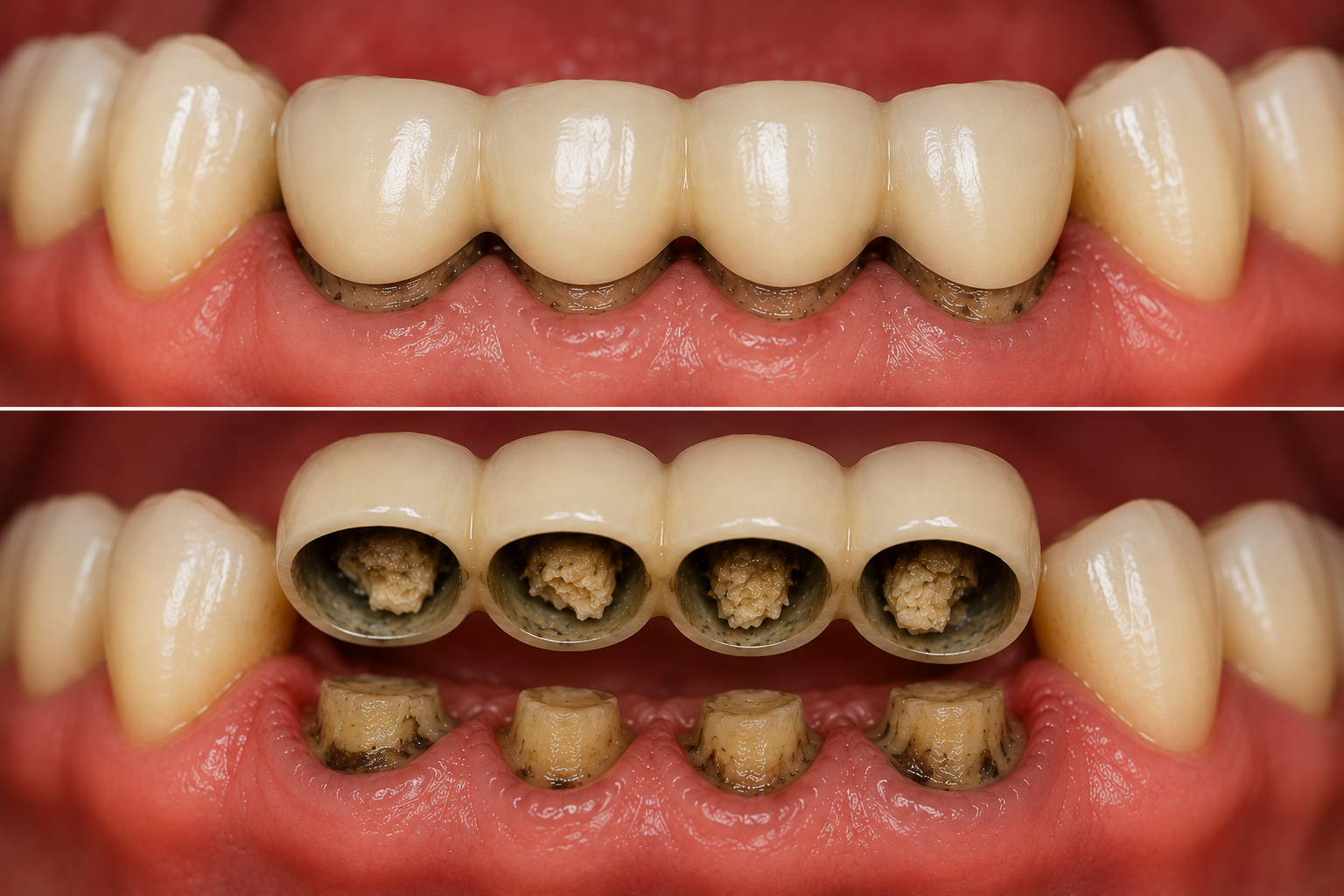
4. Path of insertion and aggressive tooth preparation
For multiple crowns to be joined together as one piece, all the prepared teeth must be shaped so they can slide into place along the same path. This is called the path of insertion.
The more teeth involved in a splinted unit or long-span bridge, the more aggressively the teeth need to be cut down so they all line up perfectly with each other. That means:
- More healthy tooth structure is removed
- The drill gets closer to the nerve in each tooth
- The risk of nerve damage and future root canal treatment goes up sharply
This ties directly into the tooth death spiral — each round of more aggressive treatment moves teeth closer to needing root canals or extraction.
5. If one part fails, it's a much bigger problem
With individual crowns, a failure on one tooth is usually a contained problem — you replace that one crown and move on.
With a splinted unit or long-span bridge:
- One failing tooth or one failed cement seal can compromise the whole structure
- Removing the failing crown often means cutting off the entire unit
- Otherwise healthy crowns on the neighbouring teeth may have to be sacrificed
- The replacement work is usually larger, more invasive, and more expensive
6. Much harder to keep clean — and the gum disease that follows
When crowns are joined together, you can no longer pass dental floss between the connected teeth in the normal way — the floss simply has no gap to slide through. That sounds like a small inconvenience, but the long-term consequences can be significant.
What this means in practice:
- Plaque and food debris build up around the gumline and underneath the joined unit
- Patients have to use special floss threaders, super floss, water flossers or interdental brushes that pass underneath the bridge — and most people struggle to do this consistently
- Even with very good technique, certain areas underneath the splint are almost impossible to reach
Over time, this can lead to:
- Chronic gum inflammation (gingivitis) around the joined teeth
- Bleeding gums, soreness and persistent bad breath
- Progressive gum disease (periodontitis), with bone loss around the supporting teeth
- Recession that exposes the margins of the crowns and the root surfaces underneath
- Decay at the gumline where the crown meets the tooth, which often goes unnoticed until significant damage has occurred
- Eventual loosening or loss of the supporting teeth — on top of the cement fatigue and hidden decay problems already described
So even when the crowns themselves still look perfectly fine on the surface, the gums and bone underneath can be quietly deteriorating for years.
Why are splinted crowns and long-span bridges so commonly offered overseas?
This is one of the questions I get asked most often, especially by patients who have had — or are considering — full-mouth reconstructions in countries that are popular for dental tourism, such as Turkey, Hungary, Poland, India, Mexico and Thailand.
In the UK and most evidence-based modern practices, splinting healthy natural teeth together is generally avoided unless there is a specific clinical reason for it. Yet abroad, it is often offered as a routine option — sometimes even as the default for full smile makeovers.
There are a few reasons for this:
- Time and appointment pressure. Dental tourism trips are usually compressed into one or two visits over a couple of weeks. There simply isn't time for the careful, staged approach that complex dentistry really needs. Joining crowns together makes the lab work and fitting faster and more predictable in the short term.
- Minimising the risk of early failure on the dentist's side. From the dentist's point of view, a single splinted unit is less likely to come loose in the first few months than several individual crowns. If something does loosen later, the patient is usually already back home and the failure is no longer their problem to manage.
- Simpler workflow for the lab. Multi-unit bridges can be milled or cast as one piece, which is quicker and cheaper to produce than many individually fitted crowns.
- Aggressive preparation as the norm. In high-volume cosmetic clinics it's common to cut teeth down heavily into "zirconia stumps" so that crowns slide on easily. Once teeth have been prepared like that, joining them together is often the only way to make the work fit predictably.
- Cosmetic short-cuts. Long, joined units can hide minor misalignments, gaps and uneven gum lines without the dentist having to do orthodontic treatment first.
!! The problem is that these decisions are being made for the convenience of the workflow and to reduce the risk of the work failing while you are still in the country — not for the long-term health of the teeth and gums underneath.
When a dentist has to consider limited time and a limited number of appointments, and is also worried about the work failing before you fly home, they can end up choosing options that are quicker and "safer" for them but more aggressive and less forgiving for your teeth. These are decisions that are not really being made for the benefit of the tooth.
In the UK, the same principles of minimally invasive dentistry and informed consent that guide good practice would usually push the conversation in a different direction — towards individual crowns, more conservative preparations, orthodontics first where appropriate, and only splinting where there is a real clinical justification.
If you're thinking about having complex dental work abroad, please read An Important Conversation: Travelling Overseas for Complex Dental Work before you commit. It walks through the questions to ask, the trade-offs to understand, and how to protect yourself from decisions that look good on day one but cause problems years later.
When are splinted crowns or bridges genuinely appropriate?
There are situations where joining teeth together is the right clinical decision, including:
- A traditional bridge to replace a missing tooth where implants are not an option
- Splinting teeth that have lost significant bone support due to gum disease, where joining adds stability
- Certain implant-supported restorations, where the implants are designed to be linked
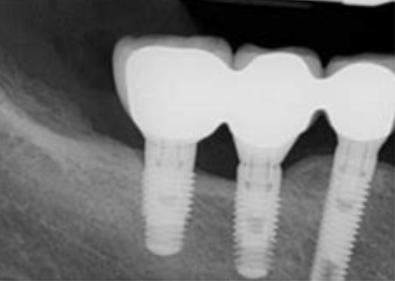
But for healthy natural teeth that could each be restored individually, joining them together is rarely the most conservative or long-term option.
How splinted crowns compare to individual crowns and true bridges
| Feature | Individual Crowns | Splinted (Joined) Crowns | True Bridge |
|---|---|---|---|
| Replaces a missing tooth | No | No | Yes |
| Natural micromovement | Preserved | Restricted across the unit | Restricted across the unit |
| Risk of hidden decay underneath | Lower — problems usually show up earlier | Higher — decay can stay hidden for years | Higher under the abutments |
| If one tooth fails | Only that crown is affected | Whole unit may need replacing, multiple teeth at risk | Whole bridge usually needs replacing |
| Tooth preparation | Most conservative | More aggressive due to shared path of insertion | Most aggressive on abutment teeth |
| Cleaning and flossing | Easiest | Harder — cannot floss between joined teeth normally | Requires special floss threaders or interdental brushes |
| Future flexibility | High — each tooth can be retreated individually | Low — changes affect the whole unit | Low — changes affect the whole bridge |
| Common use | Restoring damaged individual teeth | Sometimes used in cosmetic cases or where teeth have weakened support | Replacing one or more missing teeth |
Questions to ask your dentist
- Are you recommending individual crowns or are they being joined together?
- Why is joining the crowns being suggested in my case — is there a specific clinical reason?
- How will I be able to clean between the joined teeth?
- What happens if one of the underlying teeth develops a problem in the future?
- Could individual crowns or a more conservative option achieve the same result?
- If a true bridge is being recommended, would an implant be a better long-term alternative?
When to seek urgent in-person care
If you have severe pain, swelling, fever, trauma, or difficulty swallowing/breathing, seek urgent in-person care.