Understanding Treatment
Full-Arch Dental Implants: Realistic Expectations, Speech Changes & Long-Term Considerations
Full-arch implant treatment can be life-changing, but it is also one of the most complex treatments in dentistry. Here's what to realistically expect.
Full-arch implant treatment — sometimes called "fixed teeth," "All-on-4," or implant bridges — can be life-changing. But it is also one of the most complex treatments in dentistry.
This article explains what patients should realistically expect.
What Is Full-Arch Implant Treatment?
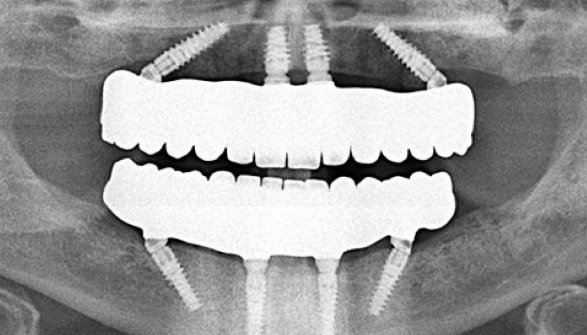
Instead of replacing individual teeth, several implants are placed to support a full bridge of teeth across the entire upper or lower jaw.
It provides stability, improved chewing, and often greater confidence compared with traditional dentures.
But it is not the same as getting your natural teeth back.
Why Can Full-Arch Bridges Feel Bulky?
Full-arch restorations must be engineered for strength.
To prevent fractures, they are often:
- Slightly thicker than natural teeth
- Built with reinforced materials
- Designed to distribute chewing forces evenly
If made too thin, they are more likely to break.
The design is dictated by durability — not just aesthetics.
Implant Position Is Dictated by Bone
Implants are placed where the bone is strongest and safest — not always exactly where the original teeth were positioned.
This means the final contour and appearance are influenced by anatomy, not just cosmetic preference.
Full-arch dentistry is a balance between:
- Bone biology
- Mechanical engineering
- Aesthetics
- Hygiene access
Will My Speech Change?
It's common to notice temporary speech differences, especially with:
- "S" sounds
- "F" sounds
- "Th" sounds
This happens because the tongue is adapting to new contours.
In most cases, speech improves naturally within a few weeks as the brain recalibrates. Occasionally, small refinements are needed to optimise pronunciation.
The Adaptation Period
Full-arch work requires adjustment.
You may notice:
- A feeling of bulk initially
- Changes in bite awareness
- Differences in chewing sensation
Adaptation is normal. Patience matters.
Maintenance Is Lifelong
Full-arch implants still require:
- Special cleaning tools
- Professional maintenance visits
- Monitoring for inflammation
- Bite checks
They are stable — but not maintenance-free.
Who Should Be Cautious?
Higher complication risk exists with:
- Smoking
- Poorly controlled diabetes
- Untreated gum disease
Optimising your health before treatment significantly improves outcomes.
Before You Commit
You should understand:
- This is a reconstruction, not a perfect replica of natural teeth
- Biology and bone dictate some design compromises
- Adjustments may be needed over time
- Long-term care is essential
Full-arch implant treatment can be transformative — but only when expectations are realistic.